
... if high oil prices persist or stock prices correct sharply.

India's manufacturing sector growth moderated in August as output and sales rose at slowest rates since January, while competitive pressures and inflation concerns hampered business confidence, a monthly survey said on Monday. The seasonally adjusted HSBC India Manufacturing Purchasing Managers' Index (PMI) stood at 57.5 in August, below July's reading of 58.1 but above its long-run average of 54.0, signalling a substantial improvement in operating conditions.

Equity benchmarks climbed in early trade on Wednesday amid an overall positive trend in the global markets and ahead of the presentation of Union Budget 2023-24. The 30-share BSE benchmark Sensex jumped 516.97 points to 60,066.87. The broader NSE Nifty climbed 153.15 points to 17,815.30.

The encouraging news, however, is that India features among the top four countries out of 44 nations that projected a positive hiring trend.

'Over the next 20 years, we would be adding almost 10 million people to the workforce every year!' 'And we won't be able to give employment to even 2 million out of the 10 million every year.' 'Don't forget, it keeps adding every year.'

Indian companies struggle in face of a set of common challenges related to logistics, labour regulations, tax and tariff policy

Inaugurating the Grameen Bharat Mahotsav, the Prime Minister exuded confidence that villages will play a key role in pushing forward the dream of Viksit Bharat by 2047.
The wholesale price index inflation is projected at 6.4 per cent for 2017-18.

Two days after violence broke out during a court-ordered survey of a Mughal-era mosque in Sambhal, Uttar Pradesh, life is gradually returning to normal with schools reopening and shops resuming operations. Internet services remain suspended and authorities continue to monitor the situation closely with restrictions in place on entry of outsiders and public representatives. The area around the Shahi Jama Masjid remains deserted, while the police investigate the violence and make arrests.

Banking on the Budget's tax relief, the BJP seeks to energise Delhi's middle class; the AAP is doing its bit too. But will their outreach mobilise this politically crucial yet disengaged electorate?

Referring to the impact of political turmoil in West Asia, he said the crisis would not hurt the economy unless the crude oil prices rise to 'abnormally' high levels.

India will not tailor its policies to suit US EV maker Tesla, and its laws and tariff rules will be formulated to attract all-electric vehicle manufacturers from across the world to set up a base in the world's fastest-growing economy, Commerce and Industry Minister Piyush Goyal said. Tesla has been seeking an initial tariff concession that would allow it to offset 70 per cent customs duty for cars priced less than $40,000, and 100 per cent for cars of higher value.
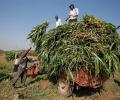
Lauding the farm sector for demonstrating resilience during the pandemic, the Economic Survey on Friday suggested the government to see farm sector as a "modern business enterprise" for which "urgent reforms" are required to enable sustainable and consistent growth. India's agricultural sector has shown its resilience amid the adversities of COVID-19 induced lockdowns, the Survey noted. The agriculture and allied activities were the sole bright spot amid the slide in GDP performance of other sectors, clocking a growth rate of 3.4 per cent at constant prices during 2020-21, it added. According to the Survey, the farm sector has got "renewed thrust" due to various measures on credit, market reforms and food processing under the Aatmanirbhar Bharat announcements.

A united opposition is set to corner the NDA government on issues ranging from the NEET paper leak case to railway safety.

'I tell young entrepreneurs if you don't have a great idea, if you don't have a good business model, don't think of a start-up.'

The finance minister continues to be backed by the same policy team in charting out the broad strategy as in the few earlier Budgets.

The move is likely to encourage service providers to take their broadband services to rural India. To further increase connectivity, it recommended allowing open access to local loop for broadband provision and designate rural fibre-optic network as a 'public carrier' for provision of telecom connectivity in the rural areas.

The plea filed by Nalanda resident Akhilesh Kumar submitted that in terms of the constitutional mandate, only the Union government is empowered to conduct a census.
The government on Thursday said that any slowdown in the excess capital flows from the last year's high levels could affect the stock market in short-term, even as it would make the monetary management easier.

In the current fiscal so far, retail inflation stabilised around 5 per cent, while wholesale price-based inflation averaged around 2.9 per cent during April-December.
.jpg)
The right sequence would be to gradually reduce SLR

The gross tax revenues have touched 65 per cent of the Budget estimates at Rs 17.81 lakh crore during the first eight months of the current fiscal till November, propelled by corporate and personal income tax mop-up, according to the Economic Survey 2022-23 presented in Parliament on Tuesday. The survey, authored by Chief Economic Advisor V Anantha Nageswaran, said the 'substantial reforms' in India's taxation ecosystem post-2014 and policy reforms have removed the distortionary incentives from the economy. Reforms like GST, reduction in corporate taxes, exemption of sovereign wealth funds and pension funds from taxes, and removing Dividend Distribution tax have reduced the tax burden on individuals and businesses.

Fitch Ratings on Tuesday raised India's growth forecast for the current fiscal to 7.2 per cent, from 7 per cent projected in March, saying elevated consumer confidence will drive spending, besides increased investments. In June update to its global economic outlook report, Fitch said it expects inflation to decline to 4.5 per cent by end of this year and RBI to cut policy interest rates by 25 basis points to 6.25 per cent.

The average age of the 125-billion strong Indian population will be 29 years in 2020, even younger than China and the US.

Per capita income in the state has consistently been below the national average for at least 24 years. However, it has narrowed the gap with the all-India level in recent years.

A quarter of the stocks have been replaced since 2019, marking the evolution of India's economy.

The deficit increased to $ 57.2 billion or 2.1 per cent of gross domestic product (GDP) in 2018-19 as against 1.8 per cent in the previous year.

Successive plans have allocated less resources to the Railways.

'It is the responsibility of industry to take the very bright talent whose knowledge of software engineering basics is very high, and then give them additional skills.'
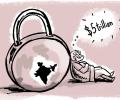
In order to achieve $5 trillion GDP by FY'25, India needs to spend about $1.4 trillion over this period on infrastructure, according to the Economic Survey. During financial years 2008-17, India pumped in about $1.1 trillion on infrastructure. However, the challenge is to step up infrastructure investment substantially, the Economic Survey 2021-22 said.

The bench noted even the high court has said in its judgement that 80 per cent of the work related to the survey has been completed.

After adding 11.7 million workers in the October 2022-September 2023 period from the pandemic lows in April 2021-March 2022, total workers employed in the vast informal sector in India - at 109.6 million - still remains below the pre-pandemic period.

Indian economy is poised to do better on the back of reforms undertaken by the government and is expected to clock a 6.5-7 per cent growth in the remaining part of the decade, Chief Economic Advisor (CEA) V Anantha Nageswaran said on Tuesday. Addressing reporters here after the tabling of the Economic Survey in Parliament by Finance Minister Nirmala Sitharaman, Nageswaran said that by and large, inflation is likely to be "well behaved" in FY2023-24 barring headwinds. "My optimism is that in the coming decade, rest of the decade, the potential GDP growth, without taking into account export potential, because global economy is still rife with uncertainty, the growth rate would be around 6.5 to 7 per cent, rather than between 6 per cent and 6.5 per cent," he said.

Investors recognise India's market growth

'Trump's disregard for norms and institutions could prove very costly for America's social fabric.'

Chief Economic Advisor (CEA) K V Subramanian will be leaving the finance ministry and returning to academia on completion of his three-year term. The government had appointed Subramanian, an ISB Hyderabad professor, as the CEA in December 2018. He had succeeded Arvind Subramanian, who quit the position close to a year ahead of his extended tenure. Subramanian's three-year term would have come up for renewal in December but he decided to return to academia.

The Economic Survey seems convinced that 2019-2020 saw the bottom of the economic cycle, points out Abheek Barua, chief economist, HDFC Bank.

It also advocated adoption of technology platforms and innovative models.

Performance of financial sector to depend on factors like investors' risk perception.

Announcing the bi-monthly monetary policy, Reserve Bank of India Governor Shaktikanta Das said the RBI's internal survey says manufacturing, services and infrastructure sector firms are optimistic of the business outlook.
 © 2026 Rediff.com - Advertise with us - Disclaimer - Privacy Policy - Sitemap - Feedback - About us - Terms of use - Grievances